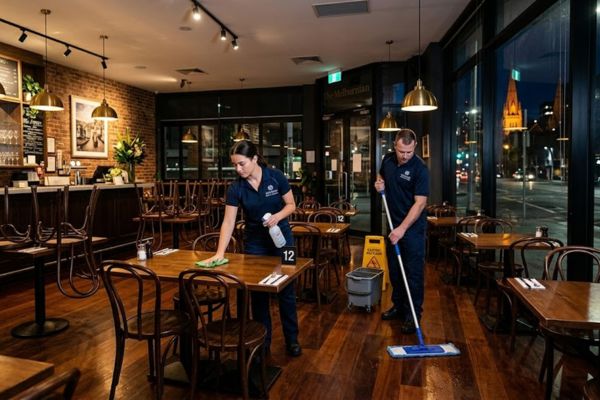
Seasonal Retail Cleaning Guide — Spring, Summer, Autumn & Winter
Retail stores and restaurants in Melbourne need a seasonal cleaning program that goes beyond the standard nightly clean — each season brings specific cleaning challenges that require targeted deep clean tasks. Spring requires post-winter exhaust duct and vent cleaning and HVAC filter servicing. Summer demands increased alfresco cleaning frequency and cool room maintenance for food businesses. Autumn calls for floor deep cleaning before the wet season and facade cleaning after leaf fall. Winter requires slip prevention on entry floors, drainage maintenance, and mould prevention in outdoor areas. This guide covers the seasonal cleaning calendar for Melbourne retail and hospitality venues.
Key Points
Seasonal Retail Cleaning — Key Points
- Melbourne's four distinct seasons create four distinct cleaning challenges — a single year-round program misses the seasonal tasks that protect your venue, equipment, and compliance standing
- Spring and autumn are the highest-value seasons for deep clean investment — post-winter remediation in spring and pre-wet-season preparation in autumn deliver the best return on cleaning spend
- Food businesses have additional seasonal compliance considerations — cool room performance in summer, exhaust duct AS 1851 scheduling, and floor condition maintenance for FSANZ 3.2.3 compliance
- Outdoor and alfresco areas have a natural cleaning rhythm tied to Melbourne's seasonal trading patterns — seasonal open/close deep cleans are the most cost-effective approach for venues with defined outdoor trading seasons
- The best time to schedule a building deep clean is during a slow trading period — typically late January for city venues (post-summer tourism), and late May/early June for suburban venues (autumn trading lull before winter)
The Seasonal Cleaning Calendar for Melbourne Retail & Hospitality
Melbourne's climate — genuinely distinct seasons with wet winters, hot summers, and the famous four-seasons-in-one-day variability — creates a cleaning calendar that differs meaningfully from other Australian cities. A Brisbane venue's cleaning program doesn't account for months of sustained wet foot traffic on entry floors. A Perth venue's program doesn't need to plan for the summer UV and heat that cracks and bleaches outdoor furniture. Melbourne venues need a program that accounts for Melbourne's specific seasonal conditions.
The following seasonal guide covers the specific cleaning tasks that Melbourne retail stores, restaurants, cafes, and shopping centre tenancies should be scheduling each season — beyond the standard nightly and weekly programs that run year-round.
- Post-winter HVAC filter clean and service — filters accumulate dust and mould spores over winter
- Air vent and return air grille deep clean — winter heating creates condensation that deposits on duct exteriors
- Outdoor area recommissioning deep clean — furniture, paving, and decking after winter storage or reduced use
- Window and glass full-building clean — winter rain streaking and environmental soiling on all glass
- AS 1851 exhaust duct quarterly clean (for venues on a spring schedule)
- Floor strip and seal reassessment — high-winter-traffic floors often need strip and seal in October
- Mould treatment on outdoor paving, decking, and shaded wall surfaces
- Cool room deep clean and temperature verification before summer load increases
- Increased alfresco cleaning frequency — higher outdoor dining patronage, more bird activity, more UV yellowing on furniture
- Cool room door seal inspection — summer heat stress increases seal deterioration rate; check monthly
- Entry floor slip prevention — Melbourne summer storms create sudden wet floor conditions at entry points
- Commercial refrigeration exterior clean — dust on condenser coils reduces efficiency in summer heat
- Bin area deep clean — high temperatures accelerate organic decomposition and odour in bin bays
- Increased bathroom frequency for alfresco venues with high outdoor patronage
- Post-Christmas and New Year deep clean (January) — highest retail patronage period followed by deep clean opportunity
- Shopfront glass and awning clean post-storm events
- Floor strip and seal before wet season — vinyl floors treated in March/April before heavy wet-winter foot traffic
- Outdoor dining seasonal close clean — full outdoor furniture, paving, and decking deep clean before winter storage
- Facade and entry paving clean — leaf tannin staining on bluestone and concrete must be treated before it bonds permanently
- Gutter and downpipe clearance adjacent to the venue — prevents overflow staining on building facade
- AS 1851 exhaust duct quarterly clean (for venues on an autumn schedule)
- Window seal and frame inspection — pre-winter moisture ingress prevention
- Carpet extraction — post-summer patron volume, pre-winter when carpet needs to be in best condition to handle wet foot traffic
- Grease trap pump-out check — ensure interval is not overdue before holiday season reduction in service
- Entry floor slip prevention — daily inspection and treatment of entry mat condition; wet floors from sustained rain are Melbourne winter's biggest slip risk
- Floor drain maintenance — all floor drains must flow freely; winter rain loading increases risk of overflow if drains are partially blocked
- Outdoor mould treatment — wet, low-UV winter conditions accelerate mould growth on outdoor paving, decking, and furniture left in place
- Increased window condensation management — interior condensation on cold glass creates water pooling on window sills and frames
- HVAC filter mid-season check — winter heating runs HVAC continuously; filters may need mid-season replacement
- Kitchen rangehood filter increased frequency — warm kitchens in cold weather increase condensation in rangehood systems
- Wet floor sign compliance review — ensure adequate wet floor signing stock and that staff protocols for signage are followed
Season-Specific Considerations for Food Businesses
Food businesses in Melbourne have additional seasonal considerations beyond general retail — the interaction of seasonal conditions with food safety compliance creates specific risks that a general retail seasonal cleaning guide doesn't address.
Summer: Cool Room Performance and Food Safety
Melbourne summer — particularly extended heatwave periods above 35°C — puts commercial cool rooms under sustained thermal stress. A cool room that maintains 3°C during standard Melbourne weather may struggle to hold below 5°C during a 40°C heatwave if the condenser coils are dusty, the door seals have minor deterioration, or the cool room contents are overloaded and blocking airflow. Under FSANZ Standard 3.2.2, food businesses must maintain potentially hazardous food at 5°C or below. A cool room failure during a summer heatwave that allows food to reach temperature is a food safety incident, not just an equipment problem.
The summer seasonal cleaning action for cool rooms: clean condenser coil exterior (dust impairs heat transfer and reduces cooling efficiency), inspect and replace door seals showing any cracking, verify internal temperature logs show consistent performance at target, and reduce cool room loading where possible during heatwave periods to maintain internal air circulation.
Autumn: Floor Preparation for Wet-Weather Compliance
FSANZ Standard 3.2.3 requires food premises floors to be maintained in a condition that prevents a slip hazard and is easy to clean. A vinyl floor in a food premises that has lost its non-slip floor finish coating over summer's high-traffic period may meet this standard in dry conditions but fail it in wet conditions when customers track water through the entry. October strip and seal — before sustained Melbourne wet-weather trading begins — is the most practical way to maintain FSANZ 3.2.3 floor condition compliance through winter.
Winter: Drainage and FSANZ Kitchen Compliance
Kitchen floor drains must remain clear and functional year-round under FSANZ 3.2.3 — but winter is when partially blocked drains are most likely to cause visible backup, because rainfall increases the volume of water reaching drainage systems throughout the building. Monthly enzyme drain treatment during winter (more frequent than the standard quarterly program) is the most practical prevention measure for Melbourne food businesses experiencing persistent winter drainage issues.
Action Steps — Seasonal Cleaning Schedule for Melbourne Retailers
The following table translates the seasonal guide into a concrete annual cleaning calendar for a standard Melbourne retail store or restaurant. Adapt frequency based on your venue type and trading volume.
| Month | Key Seasonal Cleaning Task | Venue Type | Priority |
|---|---|---|---|
| September | Outdoor area recommissioning deep clean; HVAC filter service; window full clean | All | High |
| October | Floor strip and seal (vinyl/VCT); cool room deep clean; AS 1851 exhaust (if spring schedule) | Food + retail | High |
| November | Alfresco furniture deep clean; bin bay deep clean; shopfront facade clean | Hospitality | Medium |
| December | Pre-Christmas full venue deep clean; cool room door seal check | All | High |
| January | Post-summer/New Year deep clean (slow trading window); carpet extraction | CBD + retail | Medium |
| February | Refrigeration condenser clean; alfresco cleaning frequency review; grease trap check | Food | Medium |
| March | Floor strip and seal (pre-wet season); AS 1851 exhaust (if autumn schedule); facade clean | All | High |
| April | Outdoor seasonal close deep clean; carpet extraction; leaf tannin treatment on paving | Hospitality + retail | High |
| May | Window seal inspection; drainage check; building deep clean (suburban lull period) | All | Medium |
| June | Entry slip prevention review; floor drain enzyme treatment; HVAC filter check | All | Medium |
| July | Mid-winter maintenance check: drains, seals, outdoor mould treatment | All | Low-medium |
| August | Pre-spring preparation: HVAC scheduling, outdoor area assessment, floor condition review | All | Medium |
This calendar is a guide, not a prescription — the exact timing of each task depends on your venue type, floor condition, and how Melbourne's weather has tracked in a given year. A particularly warm and dry autumn may push the floor strip and seal out to April; an unusually wet summer may require the outdoor mould treatment to be brought forward from autumn to February.
The most reliable approach is to have your cleaning contractor assess floor, outdoor, and equipment condition at each quarterly visit and recommend seasonal tasks based on actual condition rather than a fixed calendar. Condition-based scheduling is more efficient and more effective than fixed-calendar scheduling because it responds to how your venue has actually been used and what Melbourne's weather has done in a given season.
Need a seasonal deep clean for your Melbourne venue?
Spring, autumn, or any time — free site visit within 24 hours, written quote, no lock-in contracts.
FAQ
For most Melbourne retail stores, the two best windows are late January (post-Christmas/New Year trading period, before February school-holiday traffic picks up) and late April/early May (autumn trading lull, ideal timing before wet winter floor traffic begins). Both windows allow a thorough deep clean — carpet extraction, floor strip and seal, wall and ceiling clean, window deep clean — without disrupting peak trading. CBD venues typically have a distinct late-January quiet period; suburban venues have more flexibility in autumn.
Yes. The nightly close clean and weekly kitchen deep clean keep a restaurant compliant day-to-day, but they don't address the seasonal accumulation and condition changes that require periodic intervention: floor finish deterioration over a busy summer period, rangehood duct grease buildup requiring quarterly AS 1851 deep clean, cool room performance degradation in summer heat, and outdoor area condition changes across the seasons. A restaurant without a seasonal cleaning program alongside its nightly routine will see compliance issues emerge in council food safety inspections — typically floor condition, cool room performance, and exhaust duct certification are the most commonly cited issues for restaurants without seasonal maintenance programs.
Most Melbourne high-traffic retail vinyl floors require strip and seal every 3–4 months. The conventional approach of scheduling this on a fixed calendar (quarterly) is less effective than condition-based assessment — a floor that has had a particularly high-traffic summer may need strip and seal in October, while a lower-traffic winter period may allow extension to a 5-month interval. The tell-tale signs that strip and seal is needed regardless of calendar: floor appears dull and grey after cleaning, black heel marks don't clean off with auto-scrubber, floor feels sticky after cleaning. Any of these means the floor finish has deteriorated to the point where strip and seal can no longer be deferred.
Melbourne alfresco venues need two major seasonal deep cleans beyond their regular program: a spring opening clean (September–October) that pressure washes outdoor paving and decking, deep cleans all outdoor furniture, treats any mould on paving and shaded surfaces, and recommissions umbrellas, heaters, and planters after the reduced-use winter period; and an autumn closing or pre-winter clean (April) that removes leaf matter and tannin staining from paving, stores or covers outdoor furniture, and prepares the space for reduced-use winter conditions. Venues that skip the autumn deep clean typically find the paving staining has bonded by winter and requires significantly more intensive treatment in spring.
See also: All cleaning services · Compliance resources · More cleaning guides